
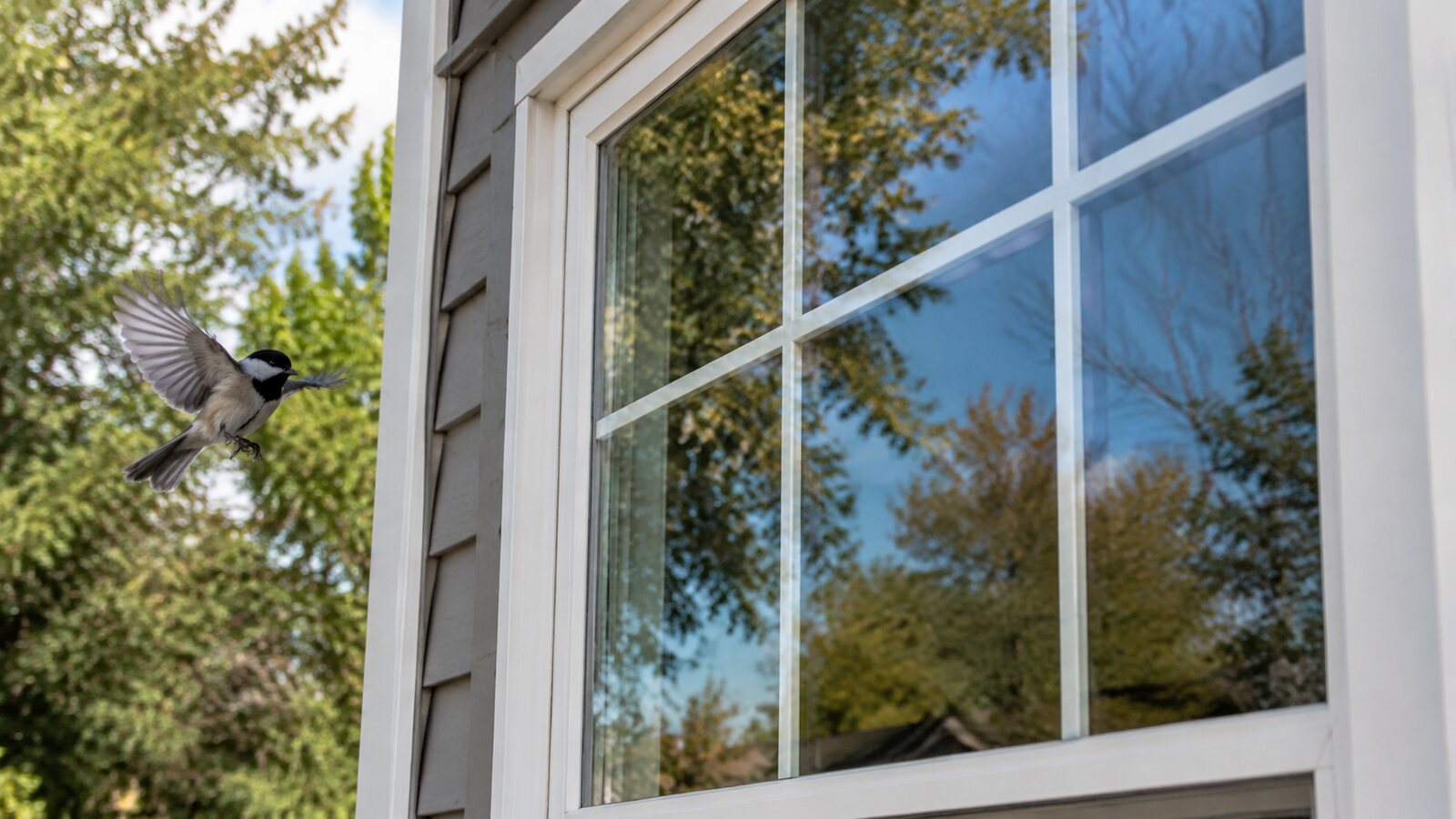
Glass doesn’t look solid to a bird
People recognize a window by its frame, reflections, indoor view, and knowledge of the building. A bird doesn’t share that understanding. It responds to what appears in the glass at that moment.
When a window reflects blue sky or green branches, the image can look like a continuation of the yard. When the glass is clear, the bird may focus on vegetation beyond it and fail to notice the barrier in between.
Reflections create false habitat
Reflective glass is especially dangerous when it mirrors trees, shrubs, flowers, or open sky. The reflection can change through the day as sunlight, shade, weather, and viewing angle change.
A window that looks harmless from indoors may appear like a bright tunnel of habitat from outside. Check it from several positions in the yard and at different times of day.
Transparent sightlines can look like an opening
Birds may see through a window to another window, an open door, a glass railing, a sunroom, or plants on the far side of a room. That view can resemble an unobstructed passage.
Windows facing one another are common problem areas. Glass corners, breezeways, balcony railings, and clear deck panels can create the same illusion even when they don’t strongly reflect the sky.
Indoor plants can increase the illusion
A large plant placed directly behind clear glass may look like shelter. A bird flying toward it can’t judge that the plant is indoors.
Moving indoor plants back from the problem window can reduce the visible target, but it doesn’t remove exterior reflections. The glass may still need an outside treatment.
Bird attractants increase activity near glass
Feeders, bird baths, berry shrubs, seed-producing flowers, and native plants bring more birds into the yard. This is valuable habitat, but it also means more flights begin and end near the building.
A startled flock may scatter in several directions without carefully choosing a route. Glass near a feeder or bath should therefore be assessed and treated rather than assumed safe because birds usually approach calmly.
Migration changes who is passing through
Spring and autumn migration can bring unfamiliar birds into a neighbourhood. Migrants may be tired, moving through new surroundings, and searching for food or cover.
Cornell notes that collisions are often most frequent around dawn and dusk during migration. Birds coming down to rest or preparing to continue their journey may encounter glass that reflects the vegetation they’re trying to reach.
Homes and low-rise buildings are part of the problem
Window collisions aren’t limited to downtown towers. Houses, schools, stores, offices, and other low-rise buildings are widespread and often surrounded by bird habitat.
Birds Canada reports that most Canadian collisions occur at houses. A single home may not experience a strike every day, but the combined effect across millions of buildings is serious.
Large windows aren’t the only risky windows
A large picture window can reflect a broad section of habitat, but smaller panes can also be dangerous when they show an appealing flight path. A narrow window beside a door may line up with another window across the room.
Treat the window connected to the collision evidence rather than assuming only the largest piece of glass matters.
Corner windows can create confusing routes
Two windows meeting at a corner may appear transparent from certain angles. A bird can see plants or sky beyond both panes and attempt to cut through the corner.
Exterior patterns should cover each pane involved in the false opening. Treating only one small central area may leave a large apparent route around it.
Glass railings need the same attention
Transparent balcony and deck railings can be difficult for birds to see. They may try to fly through them at low height, especially when plants, feeders, or water are placed nearby.
Markers, screens, or other visible exterior barriers should cover the risky area with close spacing. Building rules may affect which treatment can be used, but clear glass shouldn’t be ignored.
Territorial reflection behaviour is different
Some birds repeatedly peck, flutter, or fly at a window because they see their reflection as another bird. This behaviour is often strongest during spring breeding and territorial periods.
Reflection aggression is usually repeated and focused on the same spot. An accidental collision is more likely to be a sudden flight into glass. See why a bird attacks a window or mirror for temporary exterior-covering steps.
If a bird falls, remains on the ground, or can’t fly normally, use what to do after a window strike and contact a licensed wildlife rehabilitator promptly.
One bird may return to the same window
A territorial bird may continue for days because the reflected “rival” appears whenever the bird approaches. Closing an interior curtain may not remove the outside reflection.
Cover the exterior of the problem area so the reflection is interrupted. Treat enough of the pane that the bird can’t simply move to an untreated section.
Weather and light change the risk
Clouds, rain, bright sun, snow, and interior lighting can all change what glass looks like. A window may reflect dark trees in the morning and bright sky in the afternoon.
This is why a treatment should remain visible under several conditions. High-contrast outside markings are more dependable than a nearly transparent design that disappears in shade or overcast weather.
How to identify the dangerous window
Look for feathers stuck to glass, a dusty body or wing outline, repeated tapping, or a report from someone who heard a strike. Check the ground, roof ledges, balcony, and shrubs directly below likely windows.
Then stand outside where birds approach. Ask whether the glass reflects habitat, shows plants through the building, forms a transparent corner, or sits beside a feeder, bath, or busy garden.
Keep a short collision record
Record the date, time, weather, window, species when known, and nearby bird activity. A pattern may reveal that one pane becomes dangerous during a particular season or time of day.
Robin and I’d treat a window after one confirmed collision rather than wait for repeated evidence. A visible strike means the glass has already fooled at least one bird.
Common risk patterns
| What birds may see | Why it’s risky |
|---|---|
| Reflected sky or trees | The window resembles open habitat or a landing area. |
| Plants through clear glass | The bird attempts to reach apparent shelter on the other side. |
| Opposite windows | The building looks like a clear passage. |
| Glass corner or railing | The barrier may appear invisible from an angle. |
| A reflected bird | A territorial bird treats its image as a rival. |
| Feeder or bath beside glass | More bird traffic and startled flights occur near the window. |
Frequently asked questions
Why do birds fly into windows?
Birds may see reflected sky, trees, or plants as real habitat, or they may see through clear glass to open space and vegetation on the other side.
Why does the same bird keep attacking a window?
A territorial bird may see its reflection as a rival. This is different from an accidental high-speed collision, although exterior window treatments can help with both problems.
Are homes a serious window-collision risk?
Yes. Houses and other low-rise buildings cause many collisions because they’re numerous and their glass is often close to gardens, feeders, and vegetation.
Why are collisions more noticeable during migration?
Migration brings more unfamiliar birds through an area, and birds moving at dawn or dusk may encounter reflective glass near places where they stop to rest and feed.