
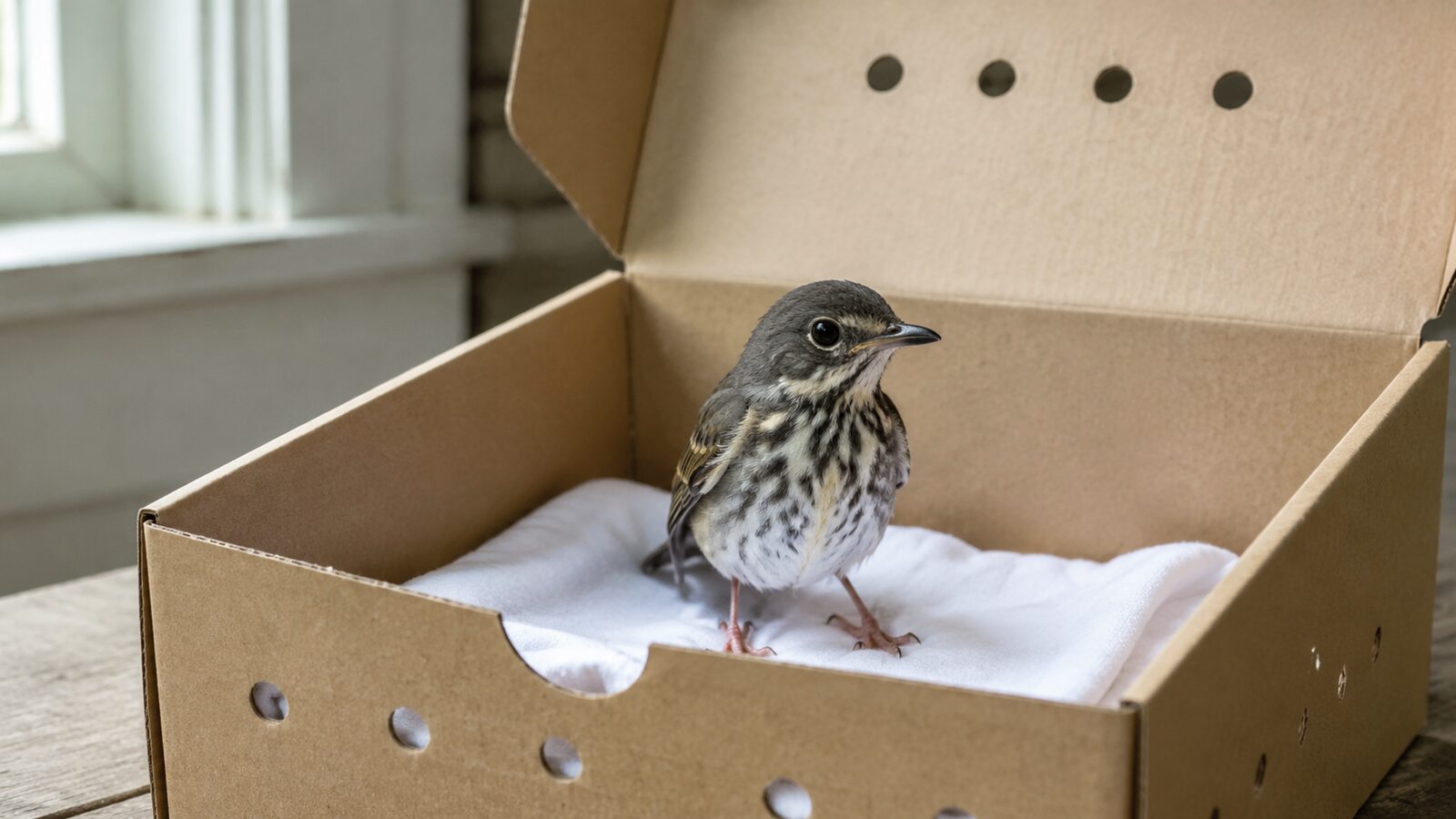
A bird that looks stunned may still be injured
A window collision can cause injuries that aren’t obvious from the outside. The bird may sit upright, blink, or even attempt a short flight while still needing professional assessment.
FLAP Canada, Cornell Lab, and American Bird Conservancy recommend contacting a wildlife rehabilitation facility promptly. Don’t assume a quiet recovery period is enough.
Keep the bird in sight while getting help
If the bird is on the ground, keep people, dogs, cats, and other animals away. Watch from a respectful distance while another person finds a container and contacts a rehabilitator.
Don’t chase a bird that can fly strongly. Tell the rehabilitator what you observed and follow their advice. A bird beside a road, doorway, or active walkway may need the area temporarily protected from traffic.
Contact a licensed wildlife rehabilitator promptly
A rehabilitator can advise whether the bird should be contained, transported, observed, or released. Tell them that the bird struck glass, when the collision happened, the approximate species or size, and what the bird is doing now.
In Canada, FLAP Canada's injured-bird page links to rehabilitation resources. In the United States, Animal Help Now can locate nearby wildlife emergency helpers. Provincial, state, and local wildlife agencies may also maintain permitted-rehabilitator lists.
Contain only when it’s safe
The following steps are intended for a small songbird that can be approached safely. Don’t attempt to handle a raptor, heron, gull, goose, large waterbird, or any bird that could injure you. Keep your distance and call a rehabilitator or wildlife authority for instructions.
If you’re uncertain, don’t improvise. Describe the bird's size, bill, feet, and behaviour to the person providing professional advice.
Use a small secure container
A small cardboard box with ventilation holes or an unwaxed paper bag can work for temporary containment. Place plain paper towel or tissue on the bottom so the bird can grip. Avoid loose fabric, loops, deep bedding, or anything that could catch feet or feathers.
Use a container only large enough for the bird to sit upright without flying around. A large clear cage can increase panic and cause additional impacts.
Handle as little as possible
When advised to pick up a small bird, approach calmly and use clean gloves or a clean light towel when available. Gently cover and support the bird without squeezing its chest. Birds need movement of the chest to breathe.
Place the bird upright in the container and secure the lid or bag immediately. Wash your hands with soap and water after contact, and clean any reusable item separately from food-preparation areas.
Keep the container dark, warm, and quiet
Place the closed container indoors in a calm location away from children, pets, loud music, television, and household activity. Darkness reduces visual stimulation and can help limit struggling.
Warm means comfortably protected from cold and drafts, not placed on a heater, in direct sun, or inside a hot vehicle. Don’t repeatedly open the box to check the bird.
Don’t give food or water
An injured or disoriented bird can inhale liquid or food into its airway. The wrong food can also complicate care, and opening the container creates more stress and another chance for escape.
Even hummingbirds shouldn’t be given homemade nectar unless a licensed rehabilitator specifically directs you. Leave feeding, fluids, and medication to trained caregivers.
Don’t use a fixed one-hour release rule
Older advice sometimes recommended placing a stunned bird in a box for a short period and releasing it when alert. Current rehabilitation guidance is more cautious because internal injuries can develop or remain hidden.
Contact a rehabilitator before release. Follow the instructions for that bird, location, and situation rather than using a timer as the deciding factor.
Transport the bird as instructed
Keep the container secured, level, dark, and quiet during transport. Don’t carry it loose on a seat where it can slide or tip. Avoid unnecessary stops and don’t open the container inside a vehicle.
Confirm the facility's location, intake hours, and whether it accepts the bird species before travelling. If transportation is difficult, tell the rehabilitator because local volunteer or transfer options may exist.
Release only when a rehabilitator directs it
If a licensed rehabilitator instructs you to attempt release, follow the exact directions. FLAP Canada recommends choosing appropriate habitat away from buildings, opening the container toward vegetation from enough distance to observe the flight, and reconnecting with the rehabilitator if the bird doesn’t fly well.
Don’t throw the bird into the air. Let it leave the container under its own power.
Large birds and birds of prey need expert help
Hawks, owls, herons, gulls, geese, and other large birds can injure a person with their feet, bill, or wings. Keep bystanders and pets away and call a wildlife rehabilitator, animal-control service, or appropriate wildlife authority.
Don’t attempt to cover, restrain, or transport a large bird unless a qualified responder gives you specific instructions and you can do so safely.
Watch for public-health guidance
Wildlife authorities may issue temporary advice about handling sick or injured wild birds because of disease concerns. Follow current provincial, state, or local instructions, especially when several birds are ill or dead in the same area.
Avoid direct contact when possible, use gloves when advised, keep pets away, and wash your hands thoroughly after handling a container or contaminated surface.
Write down what happened
Note the date, time, exact window, weather, nearby feeders or plants, and the bird's behaviour. A photograph from a respectful distance may help identification, but don’t delay care or repeatedly disturb the bird to get one.
Report the collision through a local monitoring program when available. These records can help communities identify problem buildings and migration patterns.
Treat the window before another collision
Look at the glass from outside. Identify reflected sky or plants, a clear view through opposite windows, a transparent corner, or a flight path from a feeder or bath.
Use the guide to stopping bird-window collisions. Apply a visible exterior pattern across the full problem area with gaps no larger than about two inches, or use an effective exterior screen, cord system, or suitable film.
Immediate-response checklist
| Do | Don’t |
|---|---|
| Keep people and pets away | Leave the bird exposed to cats, traffic, or crowds |
| Call a licensed wildlife rehabilitator promptly | Assume the bird is fine because it sits upright |
| Use a secure ventilated box or unwaxed paper bag when advised | Put the bird in a large cage or clear container |
| Keep the container dark, quiet, and comfortably warm | Place it in direct sun, on a heater, or in a hot car |
| Follow professional release instructions | Release automatically after a fixed amount of time |
| Treat the dangerous window | Wait for another collision before acting |
Frequently asked questions
What should I do immediately after a bird hits a window?
Keep people and pets away, contact a licensed wildlife rehabilitator promptly, and follow their directions. If it’s safe and they advise containment, place a small bird in a secure ventilated box or unwaxed paper bag in a dark, quiet, warm place.
Should I give a window-strike bird food or water?
No. Don’t offer food or water because an injured or disoriented bird can aspirate, become more stressed, or receive something inappropriate for its condition.
Can I release a bird after it looks alert again?
Contact a licensed wildlife rehabilitator first. Window collisions can cause injuries that aren’t obvious, and a bird that appears alert may still need assessment or treatment.
What container should I use for a small injured bird?
Use a small cardboard box with ventilation holes or an unwaxed paper bag, with plain paper towel or tissue on the bottom for grip. Secure it and keep it dark, quiet, warm, and away from pets and children.