
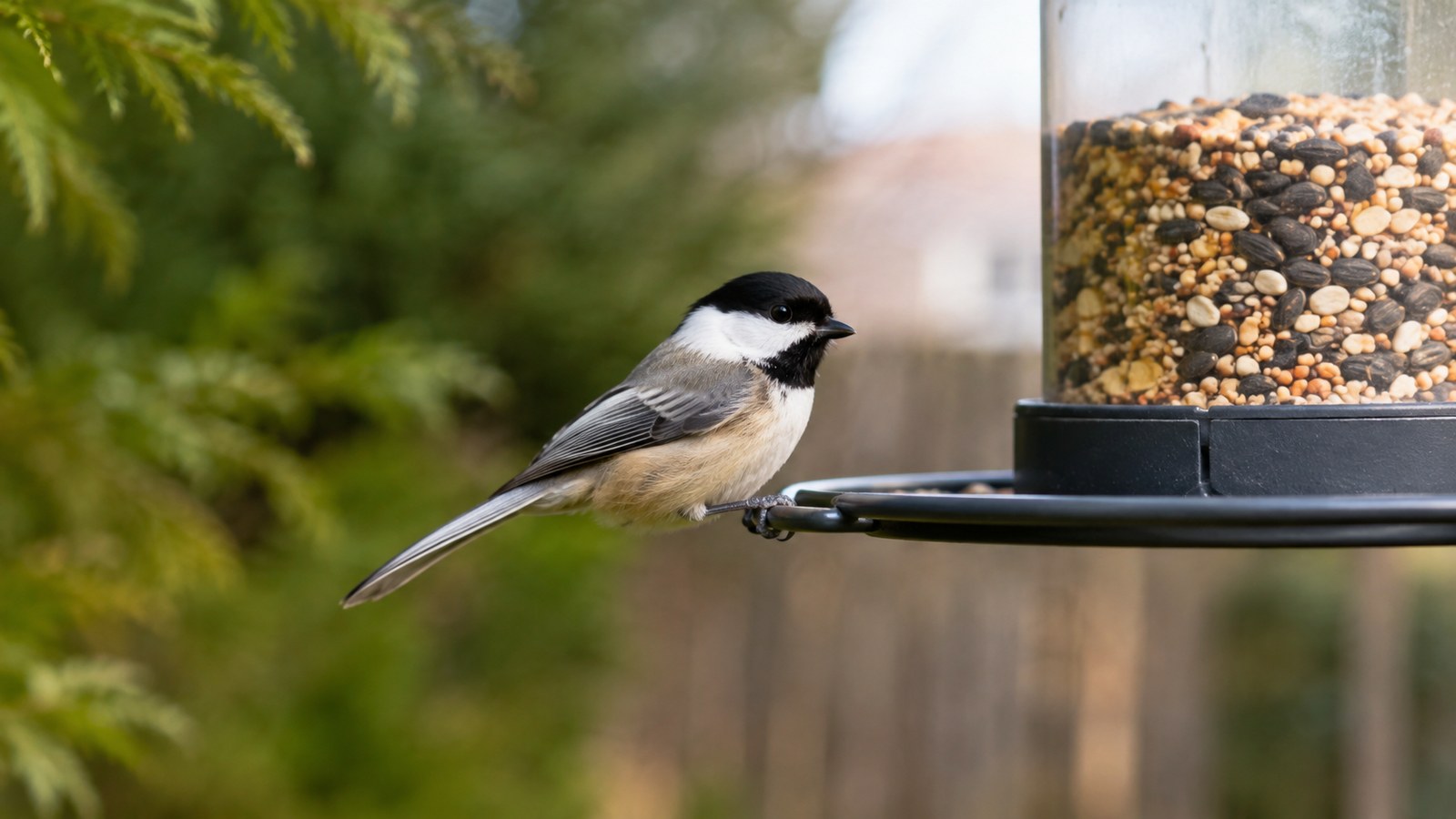
Begin with the birds' point of view
A feeder may look attractive from the kitchen window, but birds first judge whether they can approach it safely. They need time to scan the area, land securely, and retreat quickly when danger appears.
Watch the trees, shrubs, fences, and rooflines already used by birds. A feeder placed along an existing travel route is often found sooner than one standing alone in the middle of an open lawn.
Provide nearby cover nearby
Branches and shrubs give birds a waiting area where they can check for predators and take turns visiting. This is especially handy for small birds that rarely remain exposed for long.
Avoid placing the feeder immediately beside thick ground-level cover where a cat could hide. The goal is nearby escape cover with enough open space around the feeding area to reveal an approaching predator.
Take window safety seriously
Glass can reflect sky, trees, and open space. Birds leaving a feeder quickly may fly toward that reflection. Read why birds fly into windows before choosing the final view from the house.
Assess every nearby window, including glass doors, railings, and corner windows. Use the guide to stopping window collisions for exterior screens, closely spaced markers, cords, paint, and film. Feeder distance is only one part of safety, so treat reflective or transparent glass rather than relying on placement alone.
Choose a place you can reach in every season
A feeder needs regular cleaning and refilling. If it’s difficult to reach, maintenance tends to become less frequent. Choose a route that remains safe after rain, snow, frost, or falling leaves.
Think about how you’ll take the feeder down, carry seed, remove waste beneath it, and clean nearby surfaces. A location that saves a few steps makes the routine much easier to keep up.
Protect food from wind and heavy rain
Some exposure is unavoidable, but a sheltered side of the yard may keep seed drier and reduce swinging. Wet seed spoils faster, while strong wind can scatter food and make lightweight feeders difficult to use.
Don’t hang feeders where roof runoff pours onto them or where snow and ice can fall from above. Watch the location during a storm before deciding it’s suitable.
Plan for seed and hulls below
Even tidy birds drop food. Seed hulls and uneaten pieces can collect beneath the feeder, especially when large flocks visit. Choose a surface you can sweep, rake, or clean without damaging plants. The guide to stopping birdseed from sprouting covers low-waste food and ground care.
A tray may reduce waste, but it also requires cleaning. Rotating the feeder slightly or changing the ground surface below can prevent one small area from becoming muddy and crowded.
Keep squirrels and other animals in mind
Squirrels can jump farther than many people expect and may reach a feeder from branches, railings, fences, roofs, and outdoor furniture. A freestanding pole in an open area can be easier to protect with an appropriate baffle.
Don’t create risky improvisations with grease, sharp objects, fishing line, or unstable poles. The safest system is one designed to exclude squirrels without injuring wildlife.
Match the location to the feeder type
Hanging feeders
Use a strong branch or purpose-built support that can handle wind and the weight of wet food. Check cords and hooks regularly.
Pole-mounted feeders
These offer control over height and placement. Install the pole securely and consider how the soil changes during wet or freezing weather.
Window feeders
These create close views but need frequent cleaning. Use a product intended for the window type, check attachments often, and address reflective glass around the feeder.
Ground feeding areas
Ground feeding can attract sparrows, towhees, doves, and other birds, but it may also attract rodents and place birds closer to cats. Offer small amounts and remove leftovers promptly.
Consider neighbours and shared spaces
In apartments, condominiums, and townhouses, review building or strata rules before installing a feeder. Falling seed, droppings, noise, and unwanted animals can affect people below or next door.
A contained feeder, small water source, or bird-friendly planter may be a better choice than loose seed on a balcony. Keep the area clean enough that bird watching remains enjoyable for everyone.
Make the feeder easy to see
Part of the pleasure is being able to observe visitors without repeatedly walking toward them. A view from a window, desk, or favourite chair makes it easier to notice short visits and changing behaviour.
Robin and I prefer a location where we can watch without making the birds feel watched. A little distance and a predictable routine usually lead to more natural behaviour.
Test one location before adding more feeders
Give a new location time. Watch how birds approach, whether food stays dry, how much waste collects, and whether squirrels or cats discover it. Move the feeder when there’s a clear reason, not simply because the first few days are quiet.
One well-managed feeder often teaches you more than several feeders placed around the yard at once.
Placement checklist
- Birds can see the surrounding area.
- Protective branches or shrubs are nearby.
- Dense predator cover isn’t immediately beside it.
- Nearby glass has been assessed and treated when needed.
- The feeder is reachable for regular cleaning.
- Food has some protection from severe weather.
- Waste below can be removed easily.
- The support is stable and suitable for the feeder.
- The location respects neighbours and property rules.
- You can enjoy the view without disturbing the birds.
Identify woodpeckers that visit the feeding area
Suet, peanuts, sunflower, mature trees, and nearby woodland can bring several woodpeckers into view. Use the common backyard woodpecker guide, then compare Downy and Hairy Woodpeckers by bill proportion, size reference, tail markings, voice, and feeding position.
Frequently asked questions
Should a feeder be in sun or shade?
Partial shade can keep food and water cooler, but dryness, visibility, and safety matter more than a strict sun-or-shade rule. Avoid damp areas where seed stays wet.
How high should a bird feeder be?
The correct height depends on the feeder, birds, animals, and maintenance access. It should be stable, difficult for unwanted animals to reach, and low enough for safe cleaning and refilling.
Can I move a feeder after birds find it?
Yes. Birds usually relocate it, especially when moved gradually or kept within the same general area. A move is worthwhile when it improves safety, cleanliness, or weather protection.